Hexagon Applique Tutorial

In my Random Perfection quilt I used hexagon applique. To avoid the problems I encountered where the fabric came out,  you will need to make sure some of the folded fabric comes underneath each stitch line. Also, I didn’t use Aleene’s Fabric Fusion glue which is a permanent glue. That may explain why the folds came out as well.

First I’m going to show you how to make a perfect hexagon applique. Then I’ll show you the “more fabric” way which will result in all the edges staying inside the hexagon applique even without permanent glue.

There is more than one way to make a perfect hexagon for applique and English paper piecing, but I like this method.

A PERFECT HEXAGON APPLIQUE (7/8 inch)

Cut a strip 2 5/8

Cut a strip 2 5/8″

Cut across the strip 2 1/2

Cut across the strip 2 1/2″. The piece is now 2 1/2″ by 2 5/8″.

Add a dap of glue to your paper hexagon (this is 7/8

Add a dab of glue to your paper hexagon (this is a 7/8″ hexagon)
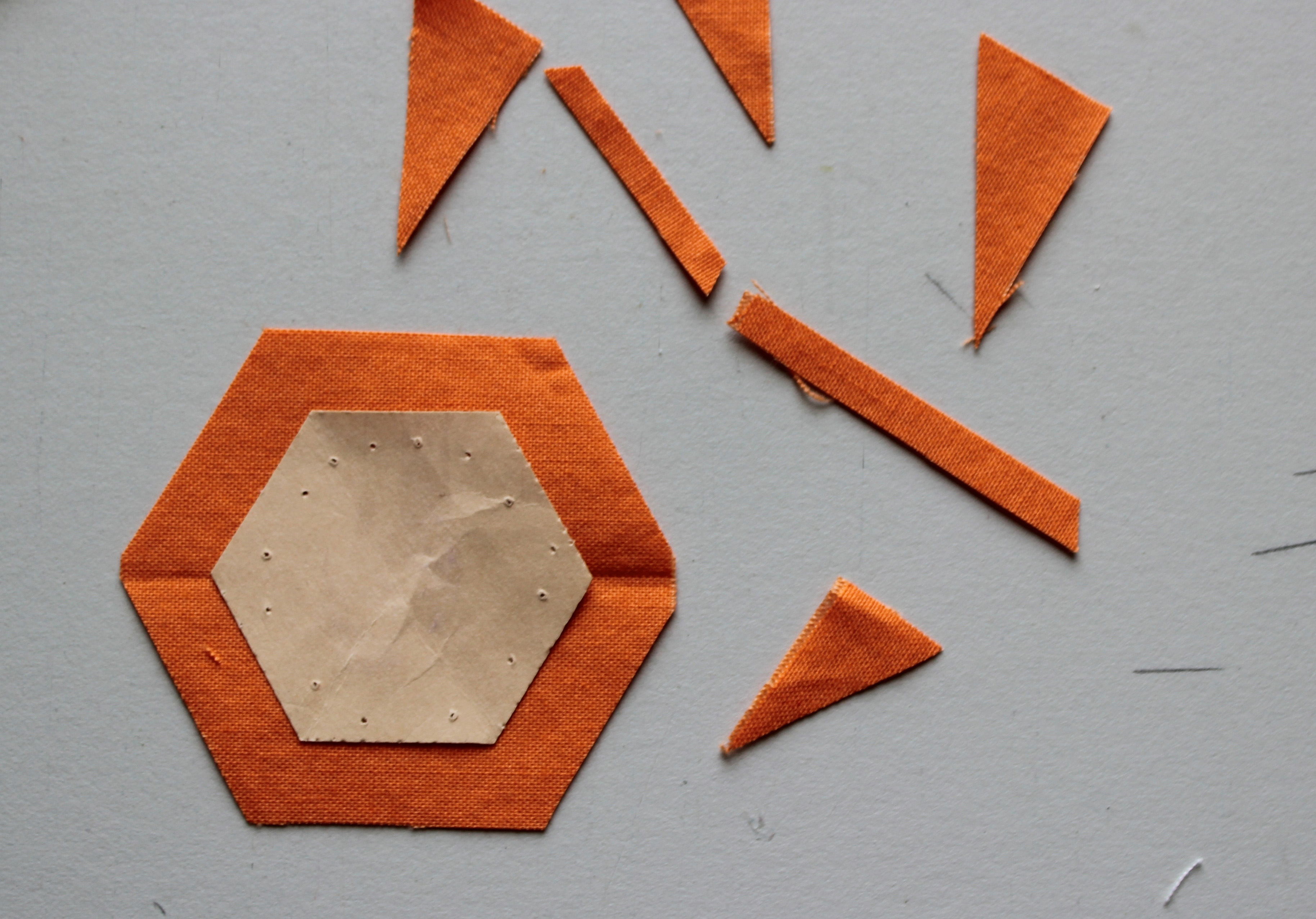
Trim around the edges. There should be at least 3/8

Trim around the edges. There should be at least 3/8″ from the edge of the paper to the edge of the fabric.

Spray regular starch into lid of starch and apply a small amount around the edges.

Spray regular starch into lid of starch and apply a small amount around the edges of the hexagon with a brush.
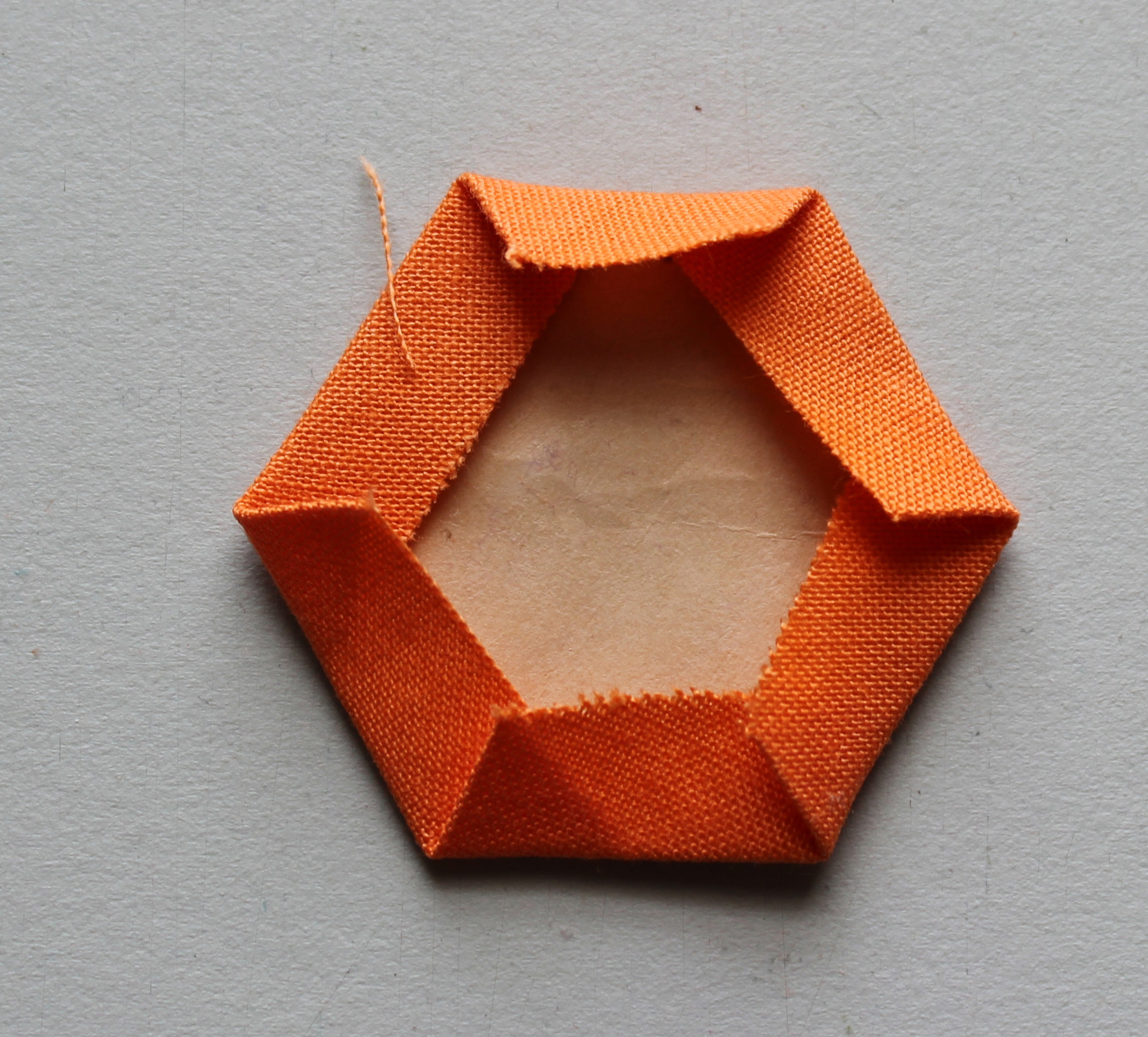
Press the hexagon with an iron.

Press the hexagon with an iron.

This is a perfect hexagon applique. You can remove the paper and there’s no basting strings to remove.

A BETTER APPROACH FOR THE MODERN HANDCRAFT TECHNIQUE

Use more fabric and don’t trim the fabric into a hexagon. Instead, do this:
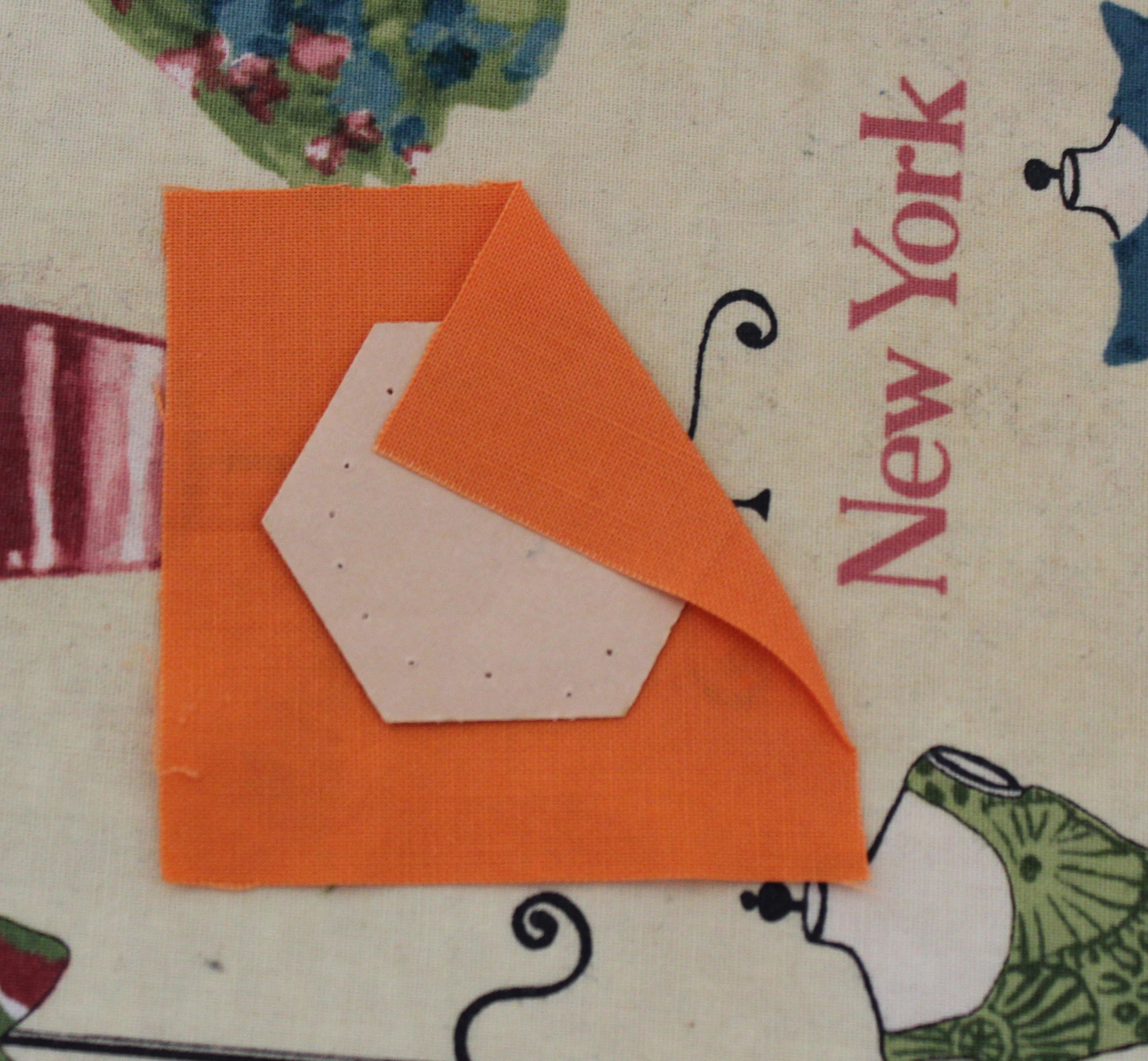
Dab a little glue on paper and attach to the fabric. Do not trim into a hexagon shape. Press.

Dab a little glue on the paper and attach to the fabric. Do not trim into a hexagon shape. Press.

hexagons more fabric

LET’S EXPERIMENT

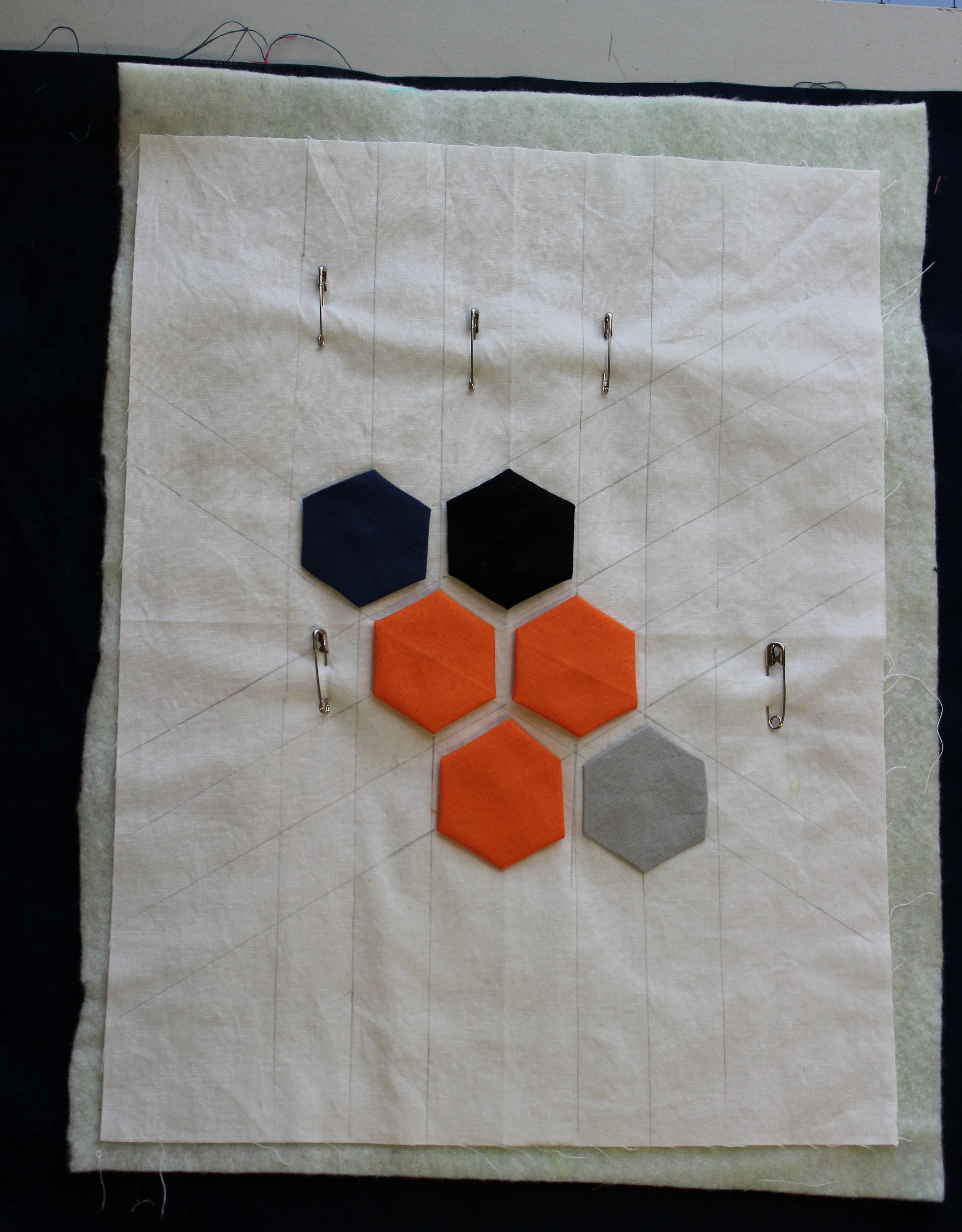
  • Make a few hexagons with the “more fabric” method and apply them using glue. I used Appli-Glue (it washes out).
  • Draw lines 7/8″ apart.
  • Space the hexies 1/4″ apart (1/8″ inch from the hexie edge to the drawn line)
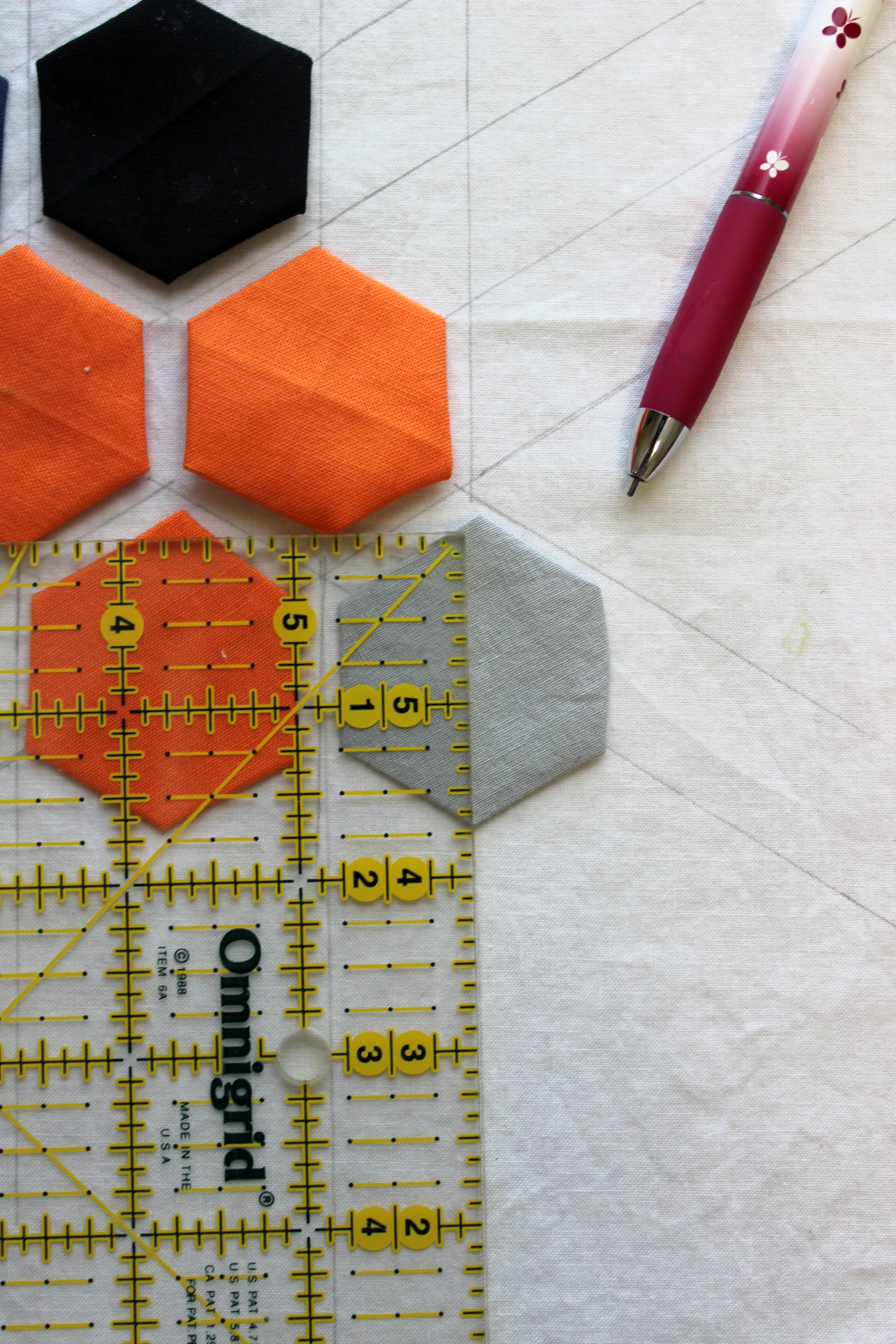
hexagons experiment measuring

  • Make a quilt sandwich:

hexagon quilt sandwich

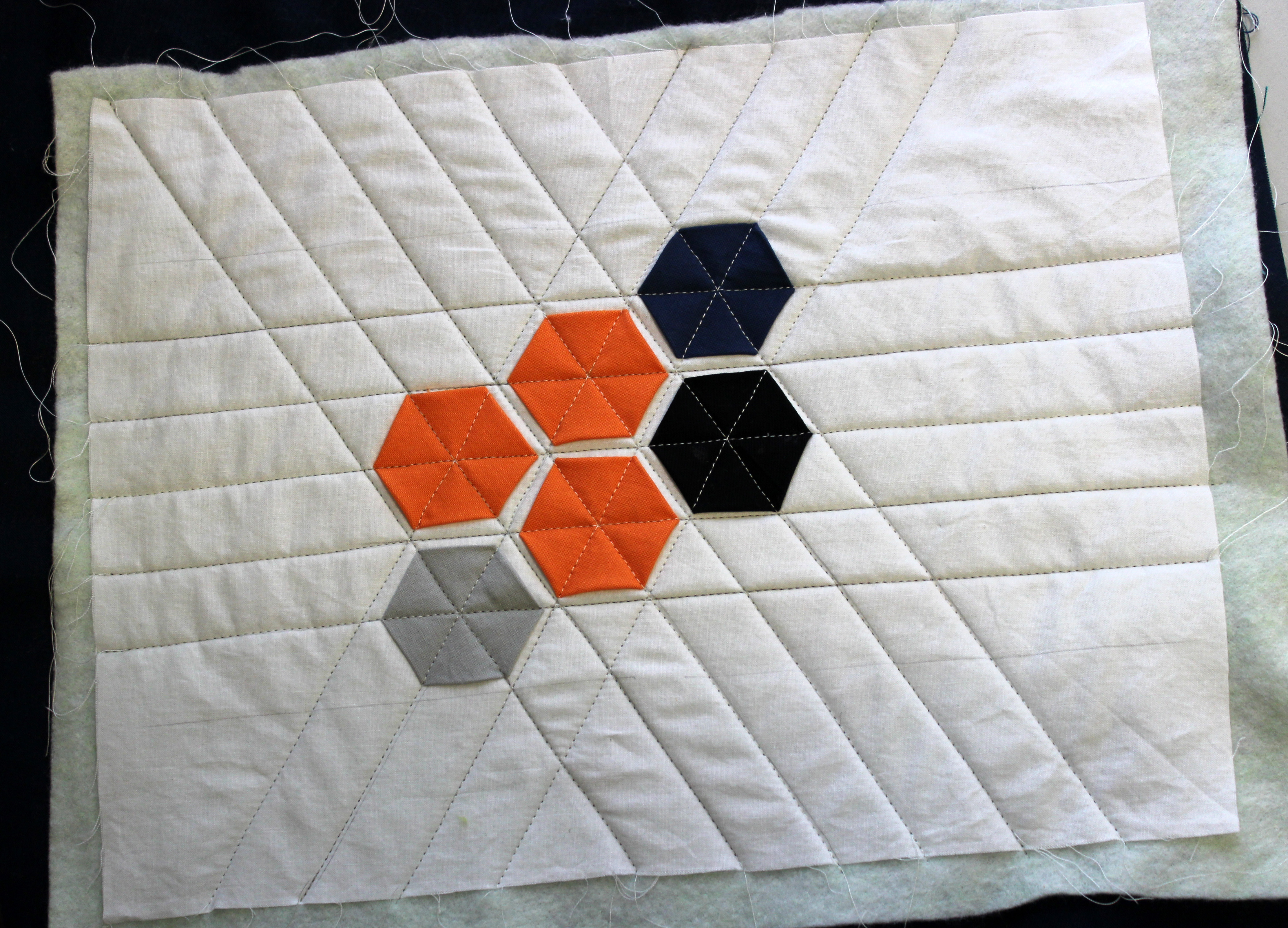
  • Stitch straight across the points. It takes three passes to get all the points.

hexagon stitch hexagons quilted

  • Square up and bind.
  • Wash it.

What happened?

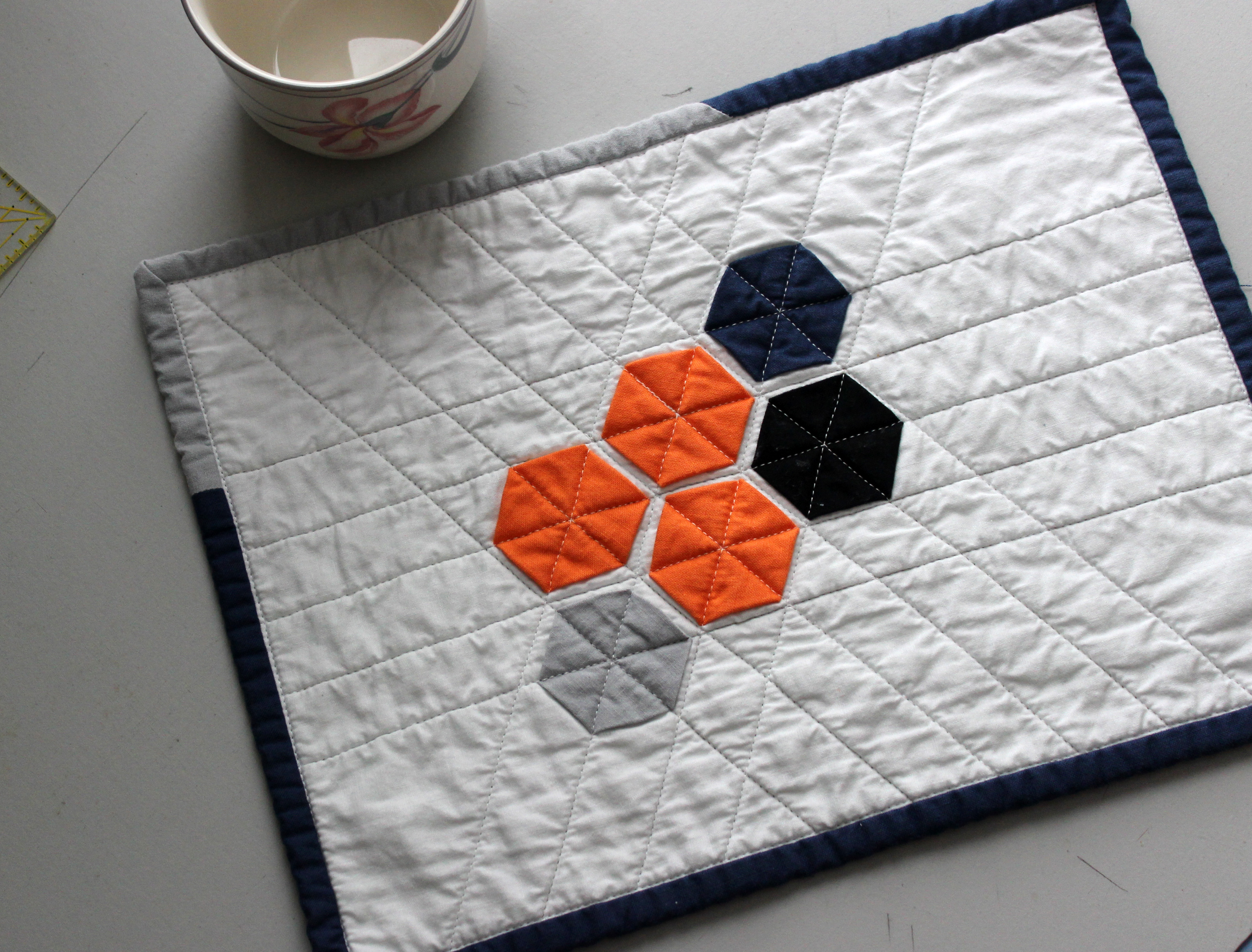
hexagon experiment closeup

hexagon experiment

Success! None of the ends came out.

Taking a break from experimenting,

Wanda

I’m linking up with The Late Night Quilters’ Tips and Tutorials Tuesdays.

Yoga Sling Tutorial

I just started yoga at a local studio and of course in the middle of meditation practice I had an idea — I needed a way to transport my “yoga quilts” to class. They make great bolsters, by the way. I didn’t want to make a bag because taking the quilts in and out of the bag would just add stress to yoga. I needed a sling.

I searched Pinterest and the web for ideas and only found yoga bags or straps to carry a yoga mat. I needed something different. I’m sharing this tutorial in case you want to make a yoga quilt sling to carry your quilts and/or your yoga mat. It would also make a great sling for beach towels.

I had these wonderful pieces I had made in my Liberated Quilting Group. The wavy piece (shown above) was made by the group leader, Betty P., during a class on “portholes” from the book, Improv Quilts, by Lucie Summers. Betty thought my red fabric looked good with her piece. I like how organic and happy it is. The perfect piece for a yoga quilt sling.

Let’s get started. Continue reading

Fretting over Shadows

I don’t know when I learned that quilting shadows were bad, but now I fret over them. I worry I’ll miss a shadow sliver and once it’s in the quilting phase I won’t be able to fix it. Quilting Shadows are those annoying slivers of fabric which show through a lighter fabric. They are easy to avoid if you’re pressing to the dark side all the time:

Seams pressed to the darker fabric.

Seams pressed to the darker fabric.

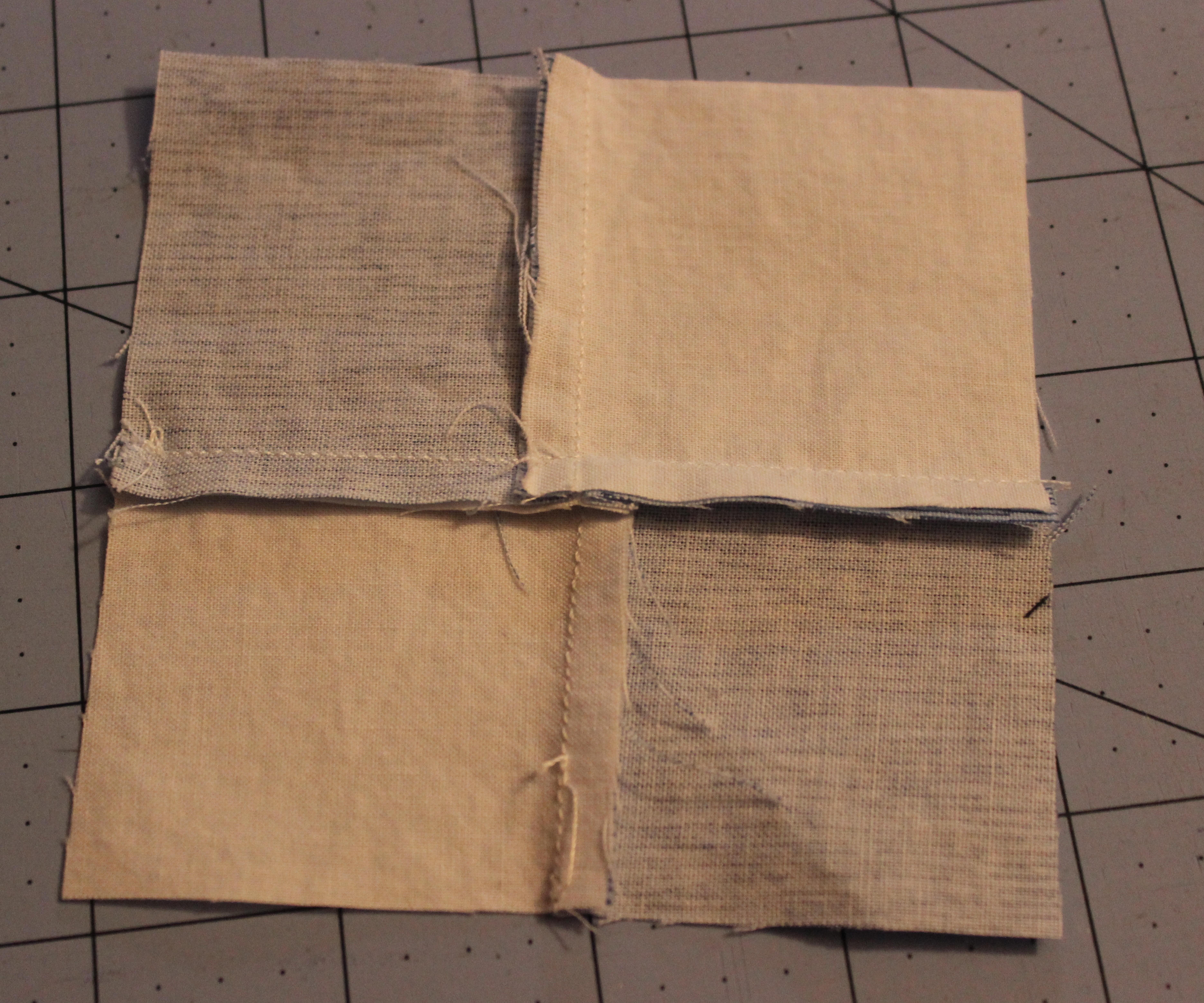
But, make a simple four-block and you can’t press only to the dark side:

four block

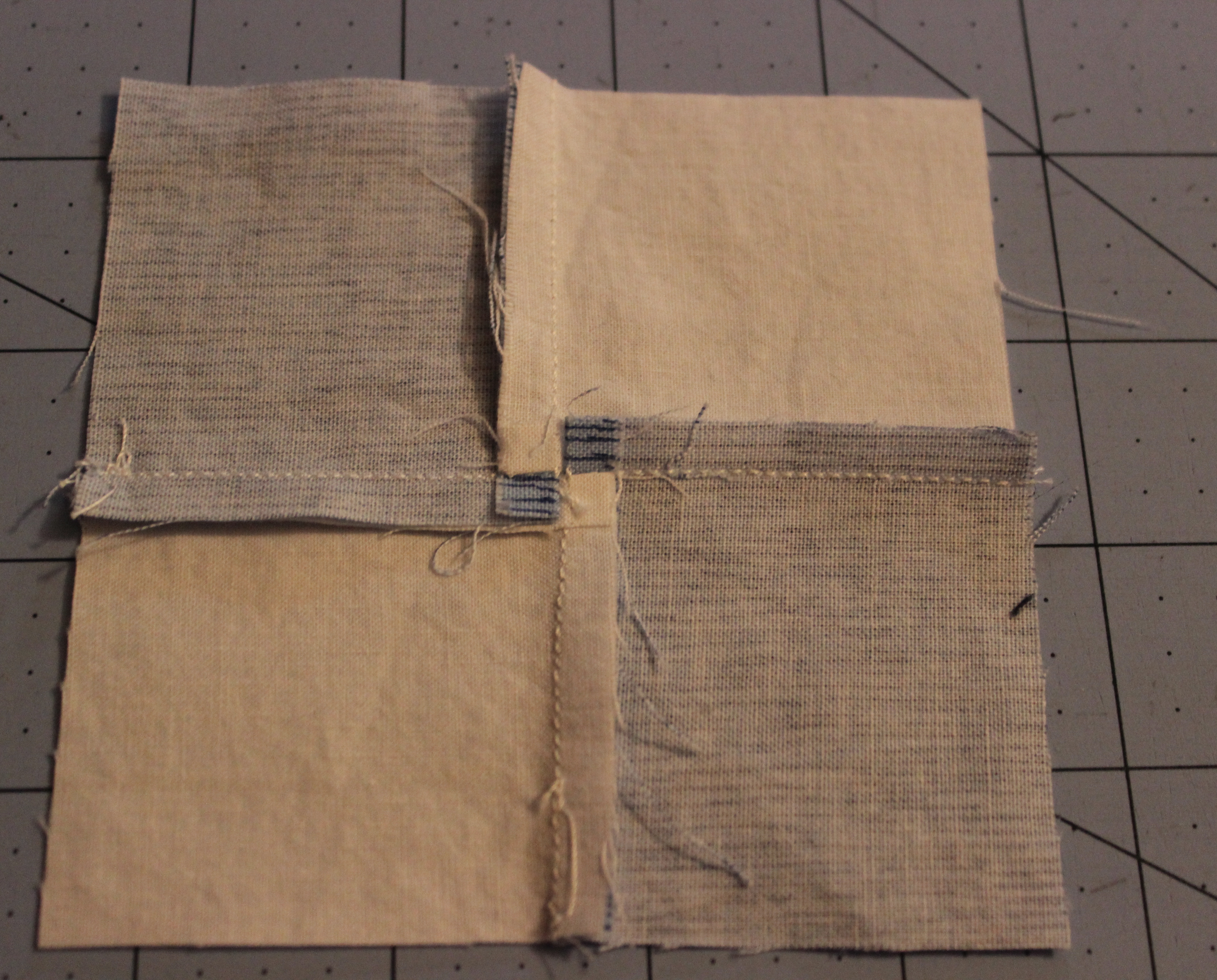
And, I like releasing the threads in the middle seam to reduce the bulk in the middle of the four-block. This also confirms you have a perfectly matched seam.

getting rid of the bulk

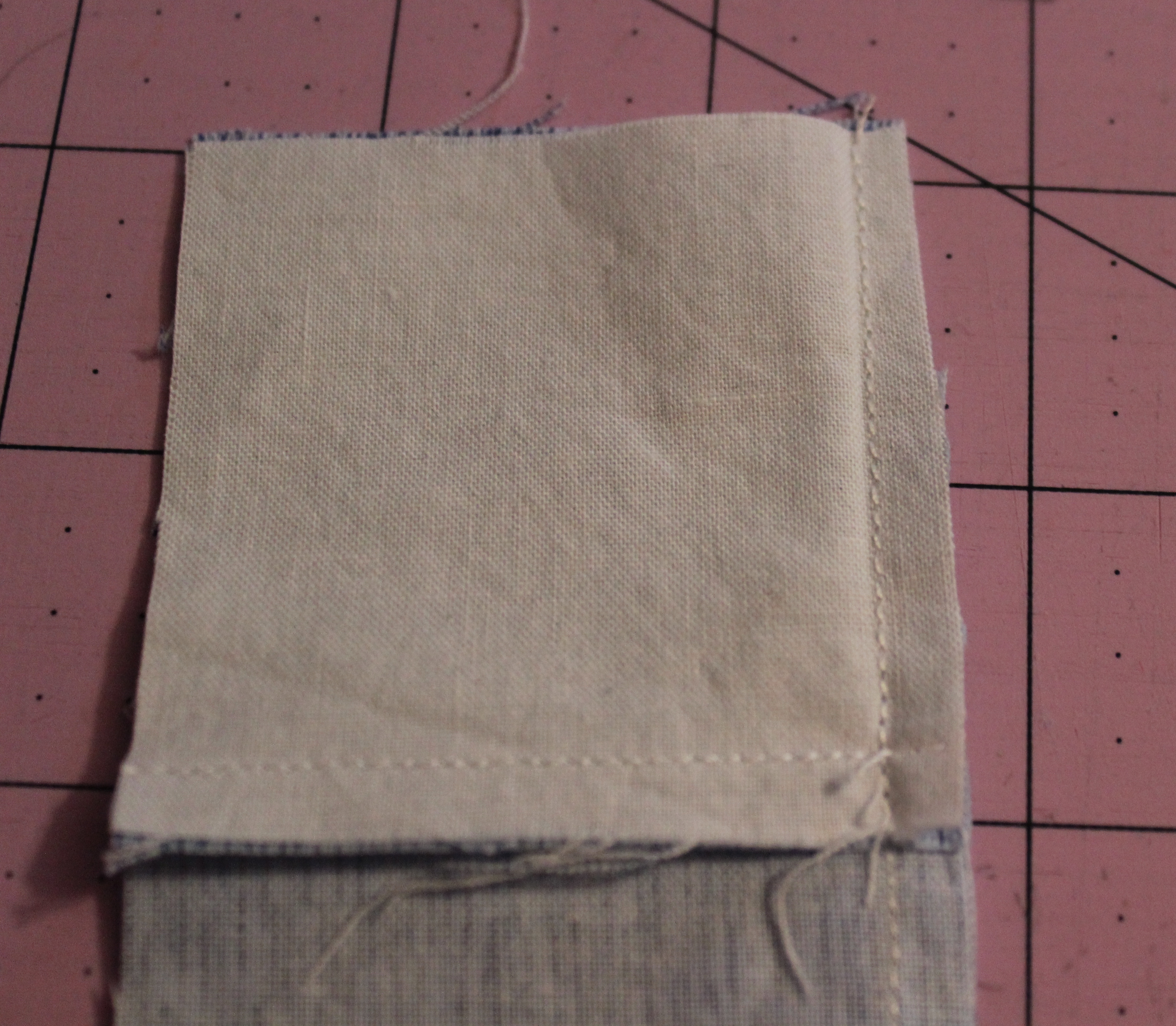
Now, the seams are pressed toward the white and away from the darker fabric, and, of course, this one has a blue shadow.

What to do?

TRIM THE SHADOWS!

shadow sliver

trim the shadow

The result is a block with NO DARK SHADOWS:

no more shadows

I’m linking up with The Late Night Quilters’ Tips and Tutorials Tuesday.

Getting out of the shadows,

Wanda